




There is a moment that every traveler to Rome eventually experiences—not at the Colosseum or the Vatican, but at a small wooden table in Trastevere or Testaccio, where a grandmother or a lifelong restaurant owner places before you a plate of cacio e pepe made exactly as her family has prepared it for generations.
The pasta steams with just-melted Pecorino Romano and cracked black pepper, and suddenly you understand that the best time to visit Rome has nothing to do with weather forecasts or crowd calendars.
It is about arriving when the city’s culinary soul is most accessible, when seasonal ingredients define neighborhood tables, when you can sit among locals rather than tourists, and when the food you eat tells the story of centuries of Roman life.
This guide walks you through Rome not as a monument-hopper, but as a cultural explorer who understands that food is history, neighborhood life is education, and timing your visit around culinary seasons, local festivals, and authentic dining traditions transforms a typical vacation into a genuine encounter with the Eternal City. You will discover when to arrive to taste Rome at its most authentic, which neighborhoods reveal their food culture most openly, and how the city’s seasonal rhythms shape everything from farmers markets to family tables.
Why the Best Time to Visit Rome Connects to Food, Culture, and Local Traditions
Understanding Rome’s Culinary Calendar
Rome’s food traditions follow agricultural seasons, not tourist seasons. Unlike many cities where dining culture remains relatively constant year-round, Roman cuisine fundamentally transforms with what grows in the surrounding Lazio region and arrives at markets. Spring brings tender artichokes (carciofi), fava beans (fave), and fresh peas that define how Romans eat for three months. Summer explodes with tomatoes at their peak flavor, zucchini, eggplant, and herbs so fragrant they perfume the air at Campo de’ Fiori market. Fall introduces grapes as harvest season arrives, figs at their sweetest, mushrooms emerging in markets, and game meats like venison and wild boar appearing on restaurant menus. Winter shifts toward citrus fruits—blood oranges, lemons, and regular oranges—along with hearty root vegetables and the preserved foods Romans have relied on through centuries.
Understanding this calendar shapes not just what you eat, but how Romans relate to their city. Markets transform seasonally. Restaurant menus shift weekly based on what vendors delivered that morning. Neighborhood dining culture expresses itself differently depending on the season. The family trattoria serving carbonara in February operates with an entirely different energy and ingredient focus than the same restaurant in July.
How Tourist Seasons Affect Authentic Dining Experiences
Peak tourist seasons (June through August, late November through December) create a paradox. The city is most visibly vibrant, yet simultaneously most resistant to authentic engagement. Restaurants in tourist-heavy areas pivot toward menus designed for international palates and mass production. Prices inflate dramatically. Neighborhood gathering spots become photography locations. Lines form at famous establishments where Romans stopped eating years ago.
Shoulder seasons—late April through May and September through October—represent the sweet spot for culinary travelers. Weather remains pleasant (temperatures typically 55 to 75 degrees Fahrenheit). Tourist density drops significantly. Most importantly, neighborhood trattorias return to serving locals rather than tourists. Restaurant owners have time to talk about their dishes. Market vendors are less harried and more generous with recommendations. Hotel prices decline 30 to 50 percent compared to peak summer. This is when the best time to visit Rome reveals itself most clearly for food-focused travelers.
Winter (November through February) offers another compelling window. Tourist numbers reach their lowest point. Restaurant prices become genuinely affordable. Hotels offer significant discounts. Yet winter presents a trade-off: seasonal ingredient variety contracts, outdoor market browsing becomes uncomfortable in cool, sometimes rainy weather, and some neighborhood character recedes as fewer people gather outdoors. However, for travelers prioritizing authentic neighborhood dining and budget considerations, winter Rome offers experiences that no other season provides.
Cultural Events and Food Festivals Throughout the Year
Rome hosts food-centric events that define the culinary calendar and provide framework for understanding when to visit. March brings Festa di San Giuseppe, a celebration featuring zeppole (fried pastries) and traditional spring baked goods served in neighborhood churches and community centers. April through May, artichokes dominate not just markets but festivals celebrating the carciofo as central to Roman identity. June features Festa di San Giovanni, a neighborhood celebration in the San Giovanni district with street food, community dining, and traditions that connect modern Romans to centuries of local life.
September through October brings multiple Food and Wine Fest events across the city, coordinating with grape harvest season and the return of cultural programming after summer. November features wine culture celebrations as new vintage wines emerge. December transforms Rome into a city of Christmas markets and holiday food traditions—panettone (festive cake), pandoro (lighter festive cake), and torrone (nougat) appearing in every bakery and market stall.
These events are not tourist performances. They are expressions of how Romans organize their relationship with food, seasons, and community. Timing your visit to overlap with these celebrations means witnessing living traditions rather than historical artifacts.
Spring in Rome: Artichokes, Fava Beans, and Awakening Neighborhoods
March to May Culinary Highlights
Spring arrival in Rome follows a predictable but always celebrated progression marked by ingredient transformations. Late March brings the first artichokes to markets, starting with larger varieties suitable for braising (carciofi alla romana) and gradually shifting toward smaller specimens perfect for frying whole (carciofi fritti). April intensifies artichoke season, with multiple varieties appearing simultaneously—the globe-shaped romanesco artichokes, the tender violetto (purple) varieties, and the elongated specimens preferred for specific preparations.
Fava beans (fave) emerge as the second defining ingredient of spring. Romans eat them fresh and tender in April and May, often simply with Pecorino Romano cheese—a combination so fundamental it appears in school lunchboxes and expensive restaurants alike. Fresh peas, asparagus, and leafy greens round out the spring vegetable palette, each with specific traditional preparations that reflect centuries of Roman cooking.
The cultural significance of spring ingredients extends beyond nutrition. Carciofi alla romana—whole artichokes braised slowly with mint, garlic, and parsley until the hearts become impossibly tender—represents Romans’ relationship with their landscape and seasons. It is a dish that announces spring’s arrival more reliably than any calendar date.
Spring Neighborhoods for Authentic Food Experiences
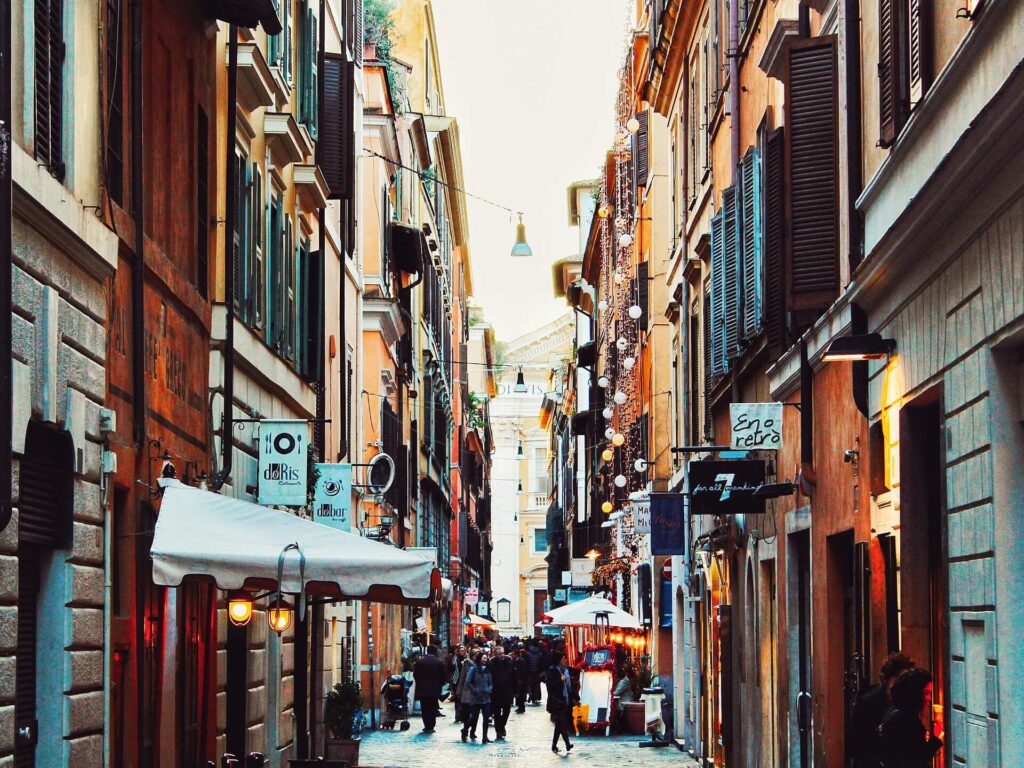
Trastevere, the neighborhood across the Tiber River from central Rome, reveals itself most authentically in spring. Historic streets lined with ivy-covered buildings host restaurants where families have dined for generations. Walk along Via della Lungaretta, where restaurants with outdoor seating fill with locals enjoying mild evening weather and fresh spring ingredients. The neighborhood maintains a village atmosphere that central Rome’s more famous areas have lost, though tourist presence is increasing.
Testaccio, traditionally a working-class neighborhood, preserves food culture that many other Roman areas have abandoned to tourism. The Testaccio Market operates continuously since the early 1900s, functioning as a neighborhood gathering point and shopping destination. Here, market vendors sell not just produce but also prepared foods, offering tourists and locals alike opportunities to observe how Romans actually cook. Spring at Testaccio Market showcases artichoke vendors demonstrating proper selection, fava bean farmers explaining ripeness indicators, and restaurant owners shopping for daily specials.
Campo de’ Fiori, the historic square famous for its daily farmers market, transforms in spring. The flower market that gives the square its name (campo = field, fiori = flowers) extends beyond vegetables into actual flowers as spring approaches. April and May bring tourists and locals together in complex, sometimes uncomfortable proximity, but shopping early morning (before 9 AM) reveals authentic market culture before tourist crowds arrive.
Spring Food Festivals and Local Events
Festa di San Giuseppe in March features zeppole, a fried pastry filled with cream or jam traditionally prepared for this saint’s feast day. While commercialized in some contexts, authentic versions appear in neighborhood bakeries and churches throughout the city. The festival connects modern Romans to centuries of saint celebrations that organized the agricultural calendar and community social life.
April and May bring various artichoke celebrations, with some neighborhood associations organizing small festivals highlighting the vegetable’s importance to Roman cuisine. These events rarely appear in tourist guidebooks, yet they reveal how Romans relate to seasonal ingredients as cultural markers rather than mere food.
Festa di San Giovanni in June technically falls outside spring, but spring weeks leading up to June feature neighborhood preparations and community planning that demonstrate how Roman social life organizes around seasonal celebrations. This feast day marks a significant neighborhood boundary and community identity marker in eastern Rome.
Summer in Rome: Tomatoes, Zucchini, and al Fresco Dining Traditions
June to August Peak Ingredient Season
Summer brings Rome’s most famous ingredients: tomatoes at their flavor peak, zucchini for multiple preparations, fresh basil and oregano so abundant they perfume the air, and eggplant for parmigiana and other traditional dishes. San Marzano tomatoes from the Campania region arrive at Roman markets, providing the foundation for pasta al pomodoro—Rome’s simplest and most profound summer dish: pasta, tomatoes, basil, quality olive oil, nothing else.
July and August intensify ingredient availability while simultaneously pushing temperatures above 85 degrees Fahrenheit, sometimes exceeding 95. This weather paradox defines summer Rome. Ingredients reach their absolute peak, yet the heat discourages traditional daytime dining patterns. Romans shift toward late evening meals, often 9 or 10 PM, dining outdoors when air temperatures have dropped and social energy returns.
Summer pasta preparations reflect ingredient abundance. Bucatini all’amatriciana (guanciale, tomato, Pecorino Romano), penne all’arrabbiata (tomato, chili pepper, garlic), and pasta alla norma (tomato, eggplant, basil) dominate menus. These are not heavy, cream-based preparations but rather tomato-based sauces highlighting the ingredient itself. Italian cooking philosophy emphasizes letting ingredients speak rather than masking them with excessive technique.
Summer Outdoor Dining Culture
Romans embrace outdoor dining (al fresco) with particular intensity in summer. Restaurants expand seating into streets and piazzas. Neighborhood bars set tables on sidewalks. Rooftop gatherings become central to social life. This outdoor culture is not merely a tourism amenity but rather a fundamental shift in how Romans experience their city. Living in apartments often without air conditioning, Romans historically escaped indoor heat by moving social and dining life outdoors.
Wine bars (enotecas) expand their outdoor seating. Standing-room wine bars with small plates (tartine) become gathering spots for evening aperitivo hour—the pre-dinner social tradition where Romans gather for a drink and small food offerings. Gelato shops stay open late, with lines forming well into evening as Romans pursue the cooling, sweet treat.
Street food culture intensifies in summer heat. Supplì al telefono (fried rice croquettes with melted mozzarella inside, the name referencing telephone wires created by stretching cheese), arancini, panini, and other portable foods dominate street corners. These are not tourist concessions but rather authentic Roman eating traditions that summer heat makes especially appealing.
Challenges and Rewards of Summer Visiting
Summer heat presents genuine challenges for food-focused travelers. Market shopping in 90-degree heat becomes uncomfortable. Walking neighborhoods for restaurant exploration tests even enthusiastic travelers. Tourist density reaches its absolute peak, with major attractions (Colosseum, Vatican, Pantheon) hosting lines of thousands. Many Romans leave the city entirely during August, creating a ghost-town atmosphere in some neighborhoods while tourist-focused areas explode with activity.
Yet summer offers rewards unavailable other seasons. Ingredient quality reaches its absolute peak. Outdoor dining culture creates authentic neighborhood experiences. Summer festivals and celebrations occur throughout the city. Shakespeare performances, concerts, and cultural events populate parks and piazzas. For travelers who embrace early morning market visits, late evening dining, and afternoon rest breaks, summer Rome offers unparalleled ingredient-focused culinary experiences.
The key to authentic summer dining involves timing. Eat lunch (pranzo) lightly at 1 or 2 PM, rest during afternoon heat, then transition to the main meal (cena) beginning around 9 PM when temperatures drop and Romans emerge for evening socializing. This rhythm, followed by Romans for centuries, allows food-focused travelers to experience summer Rome authentically rather than fighting against local patterns.
Fall in Rome: Grapes, Figs, Game, and Culinary Awakening
September to November Ingredient Transformations
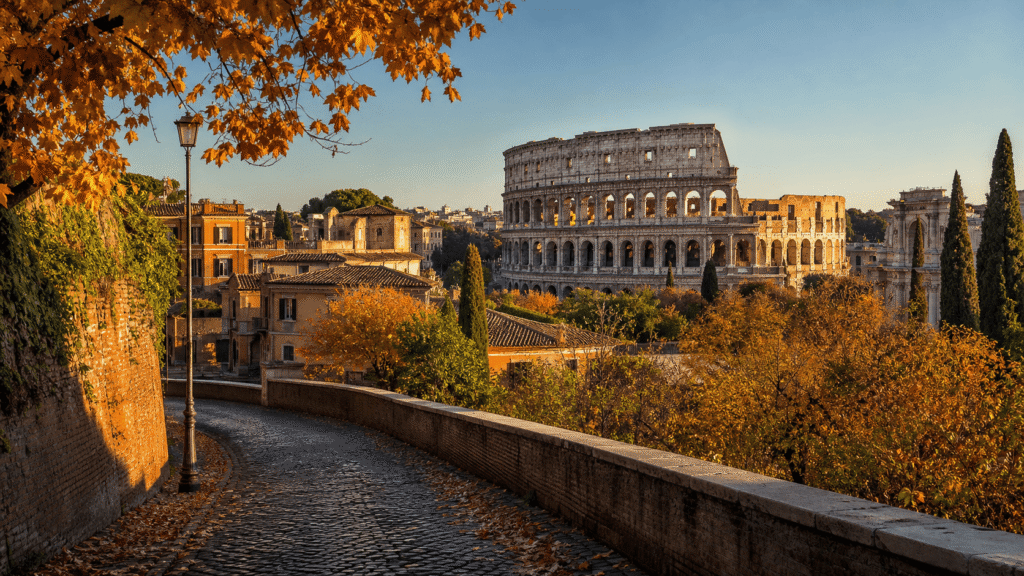
Fall represents the most celebrated season among both Romans and returning visitors. September remains warm, with summer’s last tomatoes and zucchini sharing market space with fall’s emerging ingredients. October arrives with crisp air, perfect temperatures (55 to 75 degrees Fahrenheit), and dramatic ingredient shifts. Grapes flood markets as vendemmia (harvest season) arrives. Figs, at their absolute sweetest, appear fresh and dried. Mushrooms (funghi) emerge in markets, with porcini (cep mushrooms) commanding premium prices for their earthy flavor. Game meats—venison (cervo), wild boar (cinghiale), duck (anatra)—appear on restaurant menus for the first time since spring.
Fall pasta preparations reflect these ingredient shifts. Pappardelle al ragù (wide ribbons of pasta with slow-cooked meat sauce) replaces summer’s tomato-based sauces. Tagliatelle with mushroom sauce (al funghi) becomes a restaurant staple. Ravioli filled with chestnut and sage appears on autumn menus, connecting modern Romans to historical traditions where chestnuts provided winter sustenance.
Chestnuts themselves appear roasted at street vendors, sold by weight in paper cones, providing the quintessential fall snack for Romans walking neighborhoods. Castagne (chestnuts) have been part of Roman diet since ancient times, transitioning from survival staple to beloved seasonal tradition.
Fall Food Festivals and Wine Culture
September through October brings multiple food-focused events coordinated with grape harvest season. Wine tastings occur in historic wine bars and wine shops. New vintage wines (vino novello) emerge from producers, celebrated in tastings and special dinners. These celebrations connect modern Romans to centuries of wine production in the surrounding Castelli Romani hills, where volcanic soil produces distinctive white wines that have defined Roman dining since Roman times.
Neighborhood festivals continue through fall, with local associations organizing celebrations highlighting their specific saint or community identity. These events, while less commercialized than summer equivalents, reveal authentic community culture. [INTERNAL LINK: Roman Neighborhood Celebrations and Local Traditions]
Fall as the Ideal Season for Culinary Travelers
September through November combines multiple advantages unavailable other seasons. Weather permits comfortable walking—temperatures are warm enough for outdoor exploration but cool enough to feel pleasant while moving. Tourist density drops dramatically after Labor Day, with international visitors declining 50 to 70 percent compared to summer peaks. Most importantly, restaurants return to serving primarily local clientele. Tables fill with Romans rather than tourists. Menu items reflect market availability rather than international accommodation.
Prices decline significantly. Accommodations that cost $250 in July run $140 in October. Restaurant meals cost 20 to 30 percent less than summer equivalents. Flight prices from US hubs typically drop 35 to 50 percent from peak summer rates.
October specifically represents the sweet spot. September, while pleasant, sometimes carries summer’s lingering tourist crowds and heat. November, while offering prices comparable to October, moves toward winter’s cooler weather and sometimes-rainy conditions. October combines the benefits of both months without significant disadvantages. This is when the best time to visit Rome reveals itself most clearly for travelers prioritizing authenticity, budget, and comfort simultaneously.
Winter in Rome: Citrus, Comfort Food, and Holiday Traditions
December to February Seasonal Foods
Winter ushers in a completely different ingredient palette. Citrus fruits reach peak season—blood oranges (arance rosse) from Sicily, regular oranges, lemons, and grapefruit flooding markets from November through February. These fruits, with their bright acidity and complex flavors, define winter Roman cooking. Pasta dressed with fresh lemon juice, desserts featuring candied orange peel, and granita (Italian ice) made from citrus provide bright flavors contrasting with winter’s heavier preparations.
Root vegetables and preserved foods dominate winter markets. Carrots, beets, turnips, and other storage vegetables appear in traditional preparations. Dried pasta and preserved foods, staples of Roman cooking for centuries when fresh ingredients were unavailable, return to prominence. Polenta, dried beans, and other slow-cooking ingredients suit winter’s pace and available fuel.
Winter pasta preparations emphasize richness and comfort. Carbonara (guanciale, eggs, Pecorino Romano) reaches peak popularity, served in every trattoria. Amatriciana (guanciale, tomato, Pecorino) remains available. These are the dishes Romans crave in cold months, built on preserved and long-storage ingredients rather than fresh summer vegetables.
Christmas Markets and Holiday Food Culture
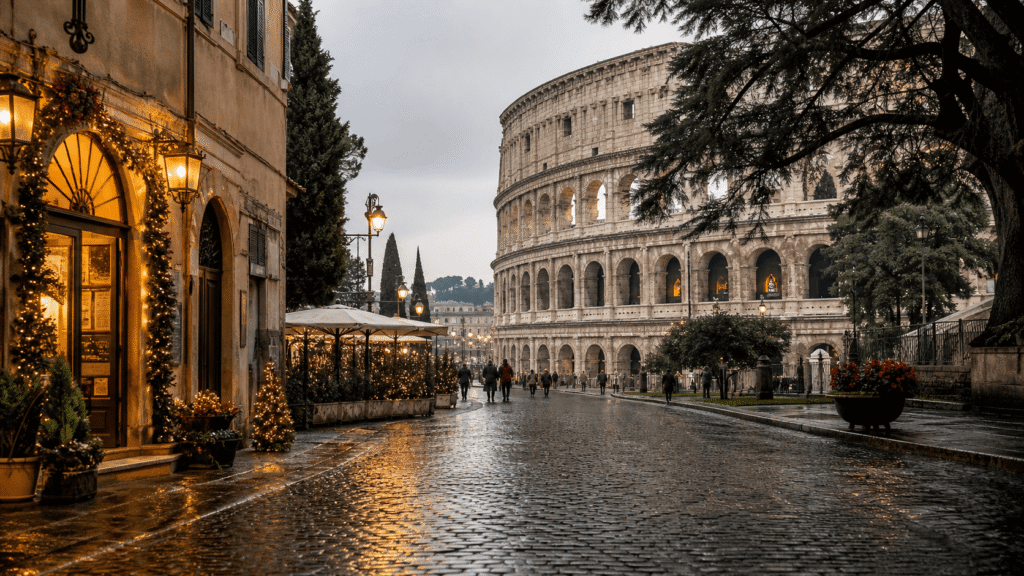
December transforms Rome into a city of Christmas markets and holiday food traditions. Piazza Navona hosts the city’s largest Christmas market, filled with ornaments, nativity figures, and food vendors selling roasted chestnuts, mulled wine (vin brulé), and holiday sweets. Panettone (traditional Christmas cake studded with dried fruit) and pandoro (lighter, less fruity Christmas cake) appear in every bakery, with family preferences often determining which variant a Roman household prepares or purchases.
Torrone (Italian nougat) in multiple flavors and preparations fills confectionery shops. Marrons glacés (candied chestnuts) provide luxury gifts. Panpepato (dark, spice-filled cake) and other historical Christmas preparations appear in specialty bakeries. These are not modern inventions but rather recipes preserved through centuries, with family traditions determining exact preparation methods.
Christmas dining traditions emphasize family gathering. Romans who have moved away return to family tables. Restaurant reservations become essential weeks in advance. December 24 and 25 feature multi-course meals emphasizing both tradition and regionality—some families prepare specific dishes passed through generations, others honor their regional origins with foods from their native areas.
Winter Advantages for Authentic Dining
Winter offers profound advantages for certain traveler types. Tourist numbers reach their absolute lowest (excluding December 20-26 peak holiday week). This means easy access to major attractions, short museum queues, available restaurant seating without reservations, and neighborhood life most visible. The city feels less like a theme park and more like an actual place where humans live.
Prices reach their annual lowest outside the December holiday peak. Hotel rates decline dramatically. Restaurant meals cost 25 to 40 percent less than summer equivalents. This financial advantage allows food-focused travelers to dine at higher-quality establishments and explore more neighborhood restaurants than their budgets permit during peak seasons.
Weather, while cool (40 to 55 degrees Fahrenheit), rarely becomes prohibitively cold. Occasional rain occurs, but snow is rare. For travelers from cold-climate regions, Roman winter feels mild and pleasant. Layers and a light jacket suffice for comfortable exploration.
The trade-off involves seasonal ingredient limitations. Summer’s abundance of fresh tomatoes, zucchini, and herbs vanishes. Winter’s ingredient palette emphasizes preserved foods, citrus, and storage vegetables. For travelers prioritizing fresh, peak-season ingredients, winter represents a compromise. For those comfortable with winter cooking traditions and seeking authentic neighborhood experiences, winter Rome offers unparalleled access.
The 11 Essential Roman Culinary Traditions to Experience
1. Cacio e Pepe (Pecorino and Black Pepper Pasta)
Cacio e pepe represents Roman food philosophy in its purest form. Only four ingredients—pasta, Pecorino Romano cheese, black pepper, and salt—combine to create a dish of extraordinary complexity. The preparation demands technique: pasta must be cooked precisely, water reserved at the moment of al dente doneness, cheese grated finely, and pepper cracked fresh. The combination creates an emulsion where starch from pasta water, fat from cheese, and pepper combine into a creamy sauce without any cream whatsoever.
The dish emerged from practical origins. Shepherds (pecorari) in the Roman hills needed portable, long-storing foods. Pecorino Romano (hard cheese lasting months) and black pepper (expensive but long-storing spice) traveled with them. The genius of cacio e pepe involves transforming these preserved foods into something transcendent.
This is not a dish to experience in restaurants catering to tourists. Seek it in neighborhood trattorias where locals gather, where menu items reflect market availability rather than international accommodation. Spring and winter represent ideal seasons, when Romans crave this comfort food most intensely.
2. Carbonara (Guanciale, Eggs, Cheese)
Carbonara’s story mirrors Rome’s own transformation. The dish emerged post-World War II, likely inspired by American soldiers’ bacon and eggs, but transformed through Roman ingredient logic. Guanciale (cured pork jowl) replaces bacon, providing a more complex, fatty foundation. Raw eggs create a creamy sauce with residual heat from pasta, eliminating cream entirely. Pecorino Romano provides sharp contrast to the richness.
The dish’s cultural significance extends beyond nutrition. To Romans, carbonara represents the ability to create something magnificent from humble, preserved ingredients. It exemplifies Roman food philosophy: maximize ingredient quality, use technique rather than excessive ingredients, and respect tradition while remaining practical.
Like cacio e pepe, carbonara demands authentic preparation. Many restaurants, particularly tourist-focused establishments, commit what Romans consider culinary crimes—adding cream (unnecessary), using bacon (missing guanciale’s complex flavor), or cooking the eggs too far (creating scrambled eggs rather than a sauce).
3. Carciofi alla Romana (Whole Braised Artichokes)
Carciofi alla romana represents spring’s quintessential dish. Young, whole artichokes, their outer leaves removed, are braised slowly with mint, garlic, parsley, and olive oil until hearts become so tender a fork penetrates effortlessly. The preparation transforms this vegetable into something elegant, requiring no meat or cream to justify its place on a restaurant menu.
The dish connects modern Romans to centuries of agricultural tradition. Artichokes have grown in Lazio since ancient times, becoming so central to Roman identity that April and May feature artichoke festivals throughout the region. To eat carciofi alla romana in April, surrounded by Romans also celebrating this seasonal arrival, is to participate in traditions extending back generations.
Spring represents the essential season for experiencing this dish. While some restaurants serve it year-round using preserved or imported artichokes, the authentic experience requires spring’s fresh, tender specimens. This is a dish that announces spring’s arrival more reliably than any calendar.
4. Saltimbocca alla Romana (Veal with Prosciutto and Sage)
Saltimbocca alla romana represents Roman meat cooking at its most elegant. Thin veal cutlets, topped with prosciutto and fresh sage, are browned briefly and finished with a light wine reduction. The name—saltimbocca—literally means “jump in the mouth,” referencing how the delicate, intensely flavored preparation should dissolve on the palate.
This dish, available year-round, represents Rome’s position within Italian regional cooking. Veal and prosciutto connect to northern Italian traditions, yet Roman preparation and sage (abundant in Mediterranean gardens) create something distinctly Roman. The dish demonstrates culinary sophistication without pretension, a philosophy defining authentic Roman restaurants.
5. Puntarelle with Anchovy Sauce (Cicoria Ripassata)
Puntarelle, a bitter green vegetable with a name deriving from its pointed leaves, represents acquired Roman taste. The vegetable, charred or sautéed until edges crisp and bitter notes intensify, is traditionally served with an anchovy-garlic sauce (salsa d’alici). The dish embodies what makes Roman food distinctive: embracing bitter, sharp flavors rather than masking them.
Winter (November through March) defines puntarelle season. This is not a summer dish but rather part of winter’s darker, more intense cooking. To order puntarelle in July signals to Romans that you are either confused or following a tourist guidebook rather than seasonal reality.
This dish, more than most, represents authentic Roman palate rather than international accommodation. Tourists frequently find puntarelle challenging, yet it remains central to how Romans eat. Experiencing it, understanding its role in seasonal cooking, provides insight into Roman food culture that many visitors miss entirely.
6. Bucatini all’Amatriciana (Guanciale, Tomato, Pecorino)
Bucatini all’amatriciana originates from Amatrice, a town in the Lazio region, yet has become so central to Roman identity that many assume it is exclusively Roman. The dish combines guanciale (the essential ingredient distinguishing it from generic tomato pasta), San Marzano tomatoes, and Pecorino Romano. Some versions include dried chili pepper (peperoncino), adding heat to the preparation.
Summer and fall represent ideal seasons for experiencing amatriciana authentically. Fresh tomatoes at their peak flavor define the dish. The preparation is straightforward—render guanciale fat, add tomatoes, finish with pasta and cheese—yet success depends entirely on ingredient quality and technique.
7. Supplì al Telefono (Fried Rice Croquettes with Mozzarella)
Supplì al telefono represents Roman street food at its most authentic. The name references the melted mozzarella inside, which stretches like telephone wires when bitten into. These fried rice croquettes, typically containing ragù (meat sauce) and peas in addition to cheese, represent how Romans have historically eaten on-the-go.
This is not upscale cuisine but rather working-class food elevated through quality and technique. Authentic supplì appear in neighborhood bakeries (forni), particularly in working-class areas like Testaccio. Tourist-focused areas serve inferior versions or, worse, modern interpretations barely recognizable as supplì.
Year-round availability makes supplì accessible regardless of when you visit. Yet eating them from an authentic neighborhood bakery, standing or sitting at a small table with locals, represents culinary authenticity more vividly than many expensive restaurant meals.
8. Maritozzo (Whipped Cream-Filled Pastry)
Maritozzo, a soft pastry bread filled with whipped cream, represents Roman breakfast and afternoon treat traditions. The name’s etymology remains debated, but the pastry’s role in Roman life is unambiguous: a beloved indulgence that brings joy through simplicity.
This is not haute cuisine but rather everyday food elevated through quality ingredients and execution. Romans purchase maritozzo at neighborhood pastry shops (pasticcerie), eating them with espresso for breakfast or as afternoon treats. The combination of espresso and maritozzo represents Roman social and culinary tradition as authentically as any complex preparation.
Spring and early summer represent peak maritozzo season, when cream is fresh and abundant. Yet authentic bakeries produce them year-round, using seasonal cream variations.
9. Carciofi Fritti (Fried Artichokes)
Carciofi fritti, whole small artichokes flattened and deep-fried until exteriors crisp while interiors remain tender, represents a particularly Roman preparation rooted in Jewish Roman cuisine. The dish connects to centuries of cultural exchange between Rome’s Jewish community and broader Roman cooking.
Spring artichoke season makes this dish most meaningful. Eating carciofi fritti in March or April, when artichokes are at peak tenderness and flavor, transforms the experience from mere food into connection with seasonal rhythms and culinary heritage.
The Ghetto neighborhood, historic home to Rome’s Jewish community, preserves carciofi fritti traditions more completely than many other areas. Dining there connects you to this historical food tradition while supporting businesses maintaining cultural continuity.
10. Pappardelle al Ragù (Wide Ribbon Pasta with Meat Sauce)
Pappardelle al ragù, wide ribbon pasta dressed with slow-cooked meat sauce (ragù), represents Tuscan and Lazio tradition adapted to Roman tables. The preparation demands time: meat simmered for hours, developing complex flavors impossible to achieve through speed cooking.
Fall and winter define pappardelle season. Colder months suit hearty, rich sauces built on preserved and long-cooking ingredients. Summer’s lightness and tomato-based sauces recede, replaced by the depth and comfort pappardelle provides.
This is restaurant food in the most authentic sense—the type of preparation requiring resources, time, and technical skill beyond most home kitchens. Experiencing it in a family restaurant where techniques have been refined through decades provides education in how Roman cooking actually functions.
11. Sorbetto and Granita (Italian Ice and Frozen Desserts)
Sorbetto (sorbet) and granita (Italian ice) represent Roman refreshment traditions extending back centuries. Renaissance Rome perfected the art of creating frozen desserts from fruit juices, sugar, and ice transported from mountains. Modern Romans maintain these traditions with religious devotion.
Sorbetto represents higher-end frozen desserts, typically made from fruit purées and sugar, frozen to smooth consistency. Granita, coarser and more crystalline, offers a more rustic, textured experience. Both appear year-round but carry different seasonal significance. Summer granita, particularly lemon flavor, represents cooling relief. Winter granita, perhaps featuring citrus or coffee, shifts toward different cultural role.
The gelato shop (gelateria) represents social institution rather than mere commercial establishment. Evening walks to neighborhood gelato shops, selecting flavors, eating slowly while watching street life—this represents authentic Roman social tradition accessible regardless of season. The key involves selecting shops focused on quality (gelaterias making their own product daily) rather than mass-produced operations.
Best Time to Visit Rome by Traveler Type and Food Interest
For Culinary-Focused Travelers
If food represents your primary travel interest, September through October offers unparalleled advantages. Shoulder season status means lower prices and fewer crowds. Temperature and weather remain ideal for walking markets and neighborhoods. Most importantly, seasonal ingredients transition from summer’s tomato-abundance toward fall’s grapes, mushrooms, figs, and game. Restaurants return to serving primarily local clientele, menus reflecting market availability rather than international accommodation.
An ideal itinerary involves daily market visits (particularly early morning before crowds), neighborhood-based dining in areas like Testaccio and Trastevere, food-focused walking tours or cooking classes, wine tastings at historic enotecas, and day trips to surrounding agricultural areas like Castelli Romani wine region. [INTERNAL LINK: Castelli Romani Wine Region Day Trip Guide]
April through May offers an alternative window. Spring ingredients reach peak—artichokes, fava beans, fresh peas—creating entirely different culinary landscape than fall. Weather remains pleasant. Tourist density, while increasing as summer approaches, remains manageable if you prioritize weekday visits and early morning market exploration.
For Budget-Conscious Food Explorers
November through February offers maximum financial advantage. Hotel rates drop 50 to 70 percent from summer peaks. Restaurant meals cost 25 to 40 percent less. Flight fares from US hubs typically decline 35 to 50 percent from peak summer pricing. This financial reality means budget travelers can access higher-quality restaurants and explore more neighborhood establishments than otherwise affordable.
Money-saving strategies specific to Roman dining include: eating pranzo (lunch) instead of cena (dinner), as most establishments offer significantly better value for midday meals; prioritizing neighborhood trattorias over tourist-focused restaurants; purchasing ingredients from markets and preparing picnics; standing at wine bars rather than occupying seated tables; and sharing dishes (a traditional Roman practice reducing per-person costs).
Winter’s reduced ingredient variety, while limiting fresh vegetable abundance, actually reduces menu item prices. Preserved foods, dried pasta, and winter storage vegetables cost less than summer’s premium-priced fresh produce. The trade-off between ingredient abundance and financial advantage becomes a personal decision based on your priorities.
For Seasonal Ingredient Enthusiasts
Your ideal timing depends on which season’s ingredients excite you most:
Spring (March-May): Artichokes, fava beans, fresh peas, asparagus, leafy greens. Ideal for vegetable-focused cuisine exploration. Easter traditions and spring neighborhood celebrations add cultural richness.
Summer (June-August): Tomatoes at peak flavor, zucchini, eggplant, fresh herbs in abundance. Ideal for experiencing fundamental Roman tomato-based dishes. Outdoor dining culture peaks. Heat and crowds represent trade-offs against ingredient quality.
Fall (September-November): Grapes, figs, mushrooms, game meats, chestnuts. Ideal for wine pairing traditions and harvest celebrations. Weather and crowd dynamics offer optimal conditions.
Winter (December-February): Citrus fruits at peak, root vegetables, preserved foods, holiday specialties. Ideal for comfort food and holiday traditions. Limited fresh vegetable variety represents trade-off against authentic neighborhood experiences and affordability.
Neighborhoods and Markets Where Food Culture Thrives
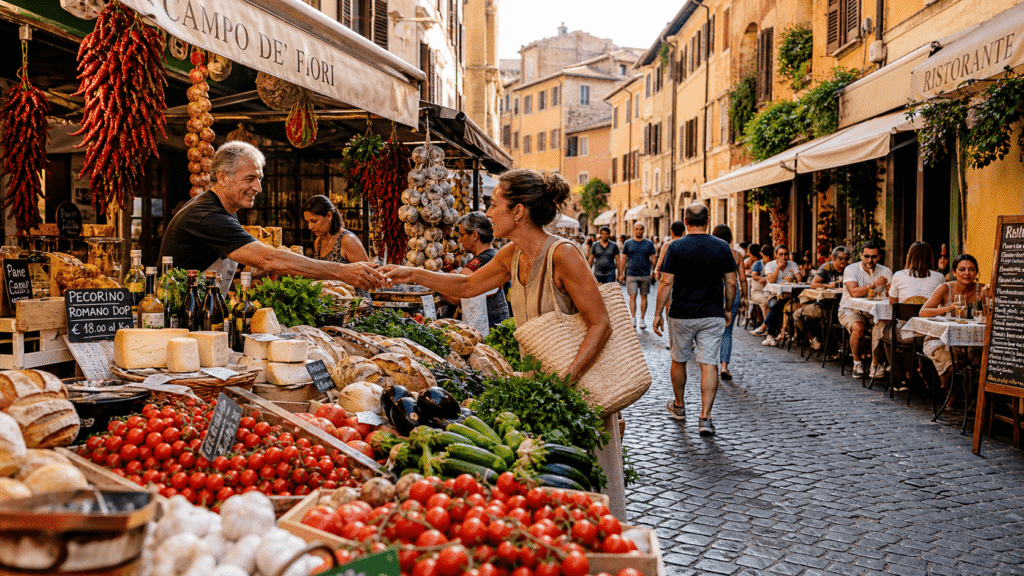
Testaccio: The Food Lover’s Neighborhood
Testaccio, Rome’s working-class neighborhood in the southern part of the city, preserves food traditions that many other areas have abandoned to tourism and gentrification. The neighborhood’s identity remains rooted in its historical role as a food distribution and preparation hub—butchers, dairy producers, and food merchants historically concentrated here.
The Testaccio Market (Mercato Testaccio), operating since the early 1900s, functions as a neighborhood institution. Unlike Campo de’ Fiori, which has become increasingly tourist-oriented, Testaccio Market remains primarily local. Vendors sell not just produce but also prepared foods, meats, dairy, and flowers. The market operates Monday through Saturday, 6 AM to 2 PM, with morning hours (before 9 AM) offering the best selection and most authentic market culture before tourist influx.
Neighborhood restaurants reflect market inventory directly. Menu items change based on what vendors delivered that morning. Prices remain reasonable compared to tourist areas. Many establishments operate as family businesses, passed through generations, with owners who speak passionately about their ingredients and preparations. [INTERNAL LINK: Testaccio Food Market and Neighborhood Dining Guide]
The neighborhood feels distinctly Roman rather than international. Streets are narrower, buildings shorter, pedestrian energy more intimate. Evening passeggiata (traditional walk) here involves actual neighborhood residents rather than tourists. This is where locals come when they want authentic Rome, not where tourists come seeking “authentic Rome.”
Trastevere: Historic Food Culture and Bohemian Charm
Trastevere, the neighborhood across the Tiber River from central Rome, presents a more complex picture than Testaccio. Historically a working-class area with significant Jewish community presence, Trastevere has transformed into a destination neighborhood while retaining some authentic character.
Walk Via della Lungaretta, Trastevere’s main street, and you encounter both authentic family restaurants operating for decades and newer establishments catering to tourists. The skill involves identifying which is which. Look for handwritten menus (reflecting daily market offerings rather than static, printed selections). Ask neighborhood residents for recommendations. Avoid restaurants with picture menus or multiple languages displayed outside.
Spring and fall represent optimal seasons for Trastevere dining. Weather permits lingering at outdoor tables. Tourist density, while present, remains manageable. The neighborhood’s village atmosphere—narrow cobblestone streets, ivy-covered buildings, small piazzas—creates romantic setting without becoming purely touristy.
The neighborhood’s proximity to the Ghetto makes it ideal for exploring Jewish-Roman food traditions. Carciofi fritti, Jewish-influenced pasta preparations, and historical relationships between different Roman communities become tangible through neighborhood exploration. [INTERNAL LINK: Rome’s Jewish Ghetto: History, Culture, and Food Traditions]
Campo de’ Fiori: Market as Cultural Institution
Campo de’ Fiori, the historic square hosting a daily farmers market, represents Rome’s most famous market institution. The market operates Monday through Saturday, 7 AM to 2 PM, with prime shopping occurring before 9 AM when vendor selection peaks and tourist crowds remain manageable.
The market’s cultural significance extends beyond food commerce. The square itself holds historical importance—this is where Renaissance executions occurred, where public gatherings happened, where Rome’s social and commercial life concentrated for centuries. The market represents continuity—selling food on this same square for hundreds of years.
Shopping at Campo de’ Fiori involves particular etiquette. Avoid touching produce before vendors approve. Use Italian greetings: Buongiorno (good morning), Grazie (thank you), Arrivederci (goodbye). Ask questions about seasonality and recommended preparations. Sample offerings when vendors suggest. Negotiate for discounts only at the day’s end, when vendors discount remaining inventory.
Restaurants surrounding the square range from authentic to tourist-focused. Seek establishments without picture menus, with Italian-speaking staff, with local clientele at tables. Eat at off-hours (2 PM for pranzo or after 10 PM for cena) to find locals rather than tourists.
Spring and fall represent optimal seasons. Weather permits comfortable lingering. Seasonal vegetables reach peak variety. Tourist density, while always present, remains manageable at off-peak hours.
The Ghetto: Preserving Jewish-Roman Food Traditions
Rome’s Jewish Ghetto, historically the area where the city’s Jewish community was required to live, remains a neighborhood where specific food traditions persist despite centuries of persecution, displacement, and cultural pressure to assimilate. Walking these narrow streets, you encounter restaurants, bakeries, and family businesses maintaining Jewish-Roman (and broader Mediterranean-Jewish) food traditions that disappeared elsewhere.
Carciofi fritti, fried whole artichokes, represents the most iconic Ghetto dish. The preparation, requiring fresh young artichokes, connects to spring season specifically. Experiencing carciofi fritti in a Ghetto restaurant, understanding its historical and cultural significance, provides education impossible from guidebooks.
Other Jewish-Roman traditions include pasta preparations using preserved vegetables, specific fish preparations honoring Sabbath restrictions, and holiday foods maintaining religious significance. The neighborhood’s restaurants do not emphasize their Jewishness as a marketing tool but rather preserve traditions as natural expression of community identity.
Spring makes the Ghetto most compelling for food-focused visitors. Artichoke season activates Ghetto traditions most vividly. Yet the neighborhood’s historical and cultural significance rewards visits in any season. Walking streets where Romans lived for centuries, acknowledging both historical persecution and cultural persistence, provides perspective that extends far beyond food into understanding Rome’s complex relationship with diversity and tradition.
Practical Planning Guide: Choosing Your Best Time to Visit Rome
Season Comparison
| Season | Weather | Crowds | Prices | Best For | Culinary Focus |
|---|---|---|---|---|---|
| March-May | 50-75°F, occasional rain | Moderate, increasing | Moderate to higher | Spring vegetables, comfortable exploration | Artichokes, fava beans, fresh peas |
| June-August | 75-95°F, hot and dry | Very high, overwhelming | High, peak pricing | Outdoor culture, ingredient abundance | Tomatoes, zucchini, summer vegetables |
| September-October | 55-80°F, pleasant | Low-moderate, optimal | Lower, good value | Authentic dining, perfect conditions | Fall ingredients, wine, mushrooms |
| November-February | 40-55°F, occasional rain | Very low, minimal | Lowest, best deals | Budget-conscious, authentic culture | Citrus, comfort foods, preserved foods |
Booking Considerations by Season
Spring Travel (March-May):
- Book accommodations 2-3 months in advance
- Easter period books particularly quickly
- Flight prices moderate but rising as summer approaches
- Restaurant reservations recommended for weekends
Summer Travel (June-August):
- Book 3-4 months in advance for best options
- Peak prices for flights and hotels
- Restaurant reservations essential, often weeks in advance
- Heat requires midday rest breaks, shifting to evening meals
Fall Travel (September-November):
- Book 6-8 weeks in advance for good availability
- September still carries summer warmth; October-November cooling
- Prices better than summer, availability excellent
- Sweet spot for most travelers
Winter Travel (December-February):
- December holidays book early; January-February available later
- January-February offers lowest prices and best availability
- Cold but generally mild and manageable
- Authentic neighborhood experiences maximized
Tips for Authentic Food Experiences Year-Round
Shopping at Markets Like a Local
Key principles for authentic market engagement:
- Arrive early (7-8 AM) for best selection and genuine market culture
- Bring your own bags (more authentic, practical, and environmentally responsible)
- Follow local customs: allow vendors to select produce rather than handling items yourself
- Ask questions about seasonality, origin, and recommended preparations
- Sample offerings when vendors suggest—this is normal practice
- Use Italian greetings: Buongiorno, Arrivederci, Grazie
- Negotiate prices only at day’s end when vendors discount remaining inventory
- Observe how locals shop and follow their patterns rather than guidebook instructions
Dining Like a Roman
Understanding Roman restaurant culture requires knowledge of dining customs and menu navigation:
Restaurant Selection: Avoid restaurants with picture menus, with many language versions displayed, or concentrated in major tourist squares. Seek establishments with handwritten menus reflecting daily market availability, Italian-speaking staff, and visible local clientele. Walk away if prices seem excessive compared to comparable establishments nearby.
Meal Structure: Understand that meals progress through courses: antipasti (appetizers), primo (first course—typically pasta, risotto, or soup), secondo (second course—meat or fish), contorno (vegetable side), dolce (dessert), and caffè (coffee). Pasta and meat do not appear in the same course; courses arrive sequentially, never simultaneously.
Dining Customs: Wine is integral to meals, ordered by glass or bottle. Cappuccino is strictly morning beverage, never after 11 AM (coffee at other meals is espresso). Tips are not required but appreciated (5-10% for service). Meals progress slowly—this is not about speed but rather about conversation, community, and savoring food.
Menu Navigation: Ask servers about daily specials (piatti del giorno) reflecting market purchases. Inquire about seasonal preparations. Don’t order both pasta and protein—choose one or the other as your primo. Understand that secondo arrives after primo has been consumed, with a separate vegetable course. Pace yourself for multiple courses rather than trying to eat everything simultaneously.
Wine Culture and Enoteca Experiences
Enotecas (wine bars) represent accessible introduction to Italian wine culture. These casual establishments—often with standing-room counters, sometimes with limited seating—serve small food plates (tartine) alongside wine selections. Prices remain affordable, particularly compared to restaurants. Staff often possess deep wine knowledge and provide recommendations based on personal preference.
Roman wines merit particular attention. Castelli Romani, the hills southeast of Rome, produce distinctive white wines that have defined Roman dining for centuries. Volcanic soil imparts mineral characteristics absent in many other Italian whites. Cesanese, a red wine from the Lazio region, offers regional character worth exploring. Local producers and family wineries provide context impossible to gain from mass-produced selections.
Understanding Italian wine requires moving beyond stereotypes. Italian wine varies dramatically by region, producer, vintage, and specific vineyard. A $12 local wine from a small producer might exceed quality of $40 mass-produced wines. Approach wine tasting with curiosity rather than pretense. Ask questions. Taste before committing to bottles. Allow servers to guide you toward value rather than famous names.
Wine-focused travel can anchor food-focused Rome visits. September through November’s grape harvest season intensifies wine culture. Winery visits in Castelli Romani region, food and wine pairing dinners, and wine tastings at historic enotecas connect you to how Romans relate to wine as integrated part of eating culture rather than separate luxury item.
Conclusion
The best time to visit Rome, ultimately, depends on what drew you to the city in the first place. If legendary ingredients excite you most, if you dream of tomatoes at peak flavor and fresh basil perfuming markets, summer demands endurance of heat and crowds for the reward of maximum ingredient abundance. If authentic neighborhood life calls to you, if you crave sitting among locals in trattorias rather than tourists, if you want authentic engagement with food culture rather than just eating, September through October offers advantages other seasons cannot match.
If budget constraints shape your decisions, if you seek affordability without sacrificing quality, winter opens possibilities that peak seasons deny. November through February delivers authentic Rome—fewer tourists crowding restaurants, neighborhood dining more accessible, prices allowing exploration of establishments otherwise beyond budget. The trade-off involves accepting winter’s reduced fresh ingredient palette and occasional cool, rainy weather.
Spring and fall offer middle ground: pleasant weather without summer’s extremes, reasonable prices without winter’s ingredient limitations, manageable crowds without peak season pressure. These shoulders seasons attract experienced travelers who understand that authentic Rome requires accepting trade-offs.
Regardless of season, success depends less on calendar dates and more on how you approach the city. Arrive with curiosity rather than checklist completion. Spend time in markets, observing seasonal abundance. Eat where Romans eat, not where tourists photograph. Ask questions about ingredients and preparations. Accept that food is history, neighborhood life is education, and Rome’s soul expresses itself most clearly through the simple act of sharing meals with people you meet along the way.
The best time to visit Rome is not a perfect month. It is the time when you are present, observant, and willing to let the city teach you its rhythms. When you are ready to explore Rome’s layers through food and culture, when you understand that authentic travel requires flexibility and genuine engagement, then—whenever that occurs on your calendar—is the best time.
Ready to plan your culinary Rome adventure? Explore our guides to neighborhood dining, market shopping, and authentic Roman experiences across all seasons. Your next meal in Rome awaits.
FAQ Section
What is the best time to visit Rome for food experiences?
The best time to visit Rome for culinary travelers is September through October, offering optimal combination of weather, ingredient availability, crowd levels, and authentic dining access. Spring (April-May) and early November also provide excellent conditions. Summer delivers maximum ingredient abundance but involves navigating heat and overwhelming tourist presence. Winter provides lowest prices and most authentic neighborhood experiences, though fresh ingredient variety is reduced.
How does Roman seasonal cooking change throughout the year?
Roman seasonal cooking follows agricultural patterns, not arbitrary calendar divisions. Spring emphasizes artichokes, fava beans, and fresh peas. Summer revolves around tomatoes, zucchini, and fresh herbs. Fall celebrates grapes, mushrooms, figs, and game meats. Winter features citrus fruits, root vegetables, and preserved foods. Understanding these shifts transforms dining from food consumption to cultural immersion.
Which neighborhoods preserve authentic Roman food traditions?
Testaccio remains the most authentically food-focused neighborhood, with traditional market and neighborhood restaurants reflecting local rather than tourist clientele. Trastevere offers historic charm while maintaining some authenticity, though tourist presence is increasing. The Ghetto preserves unique Jewish-Roman traditions, particularly carciofi fritti. Campo de’ Fiori functions as food culture hub through its historic market, though surrounding restaurants vary in authenticity.
What is the cheapest time to visit Rome for dining?
November through February offers lowest restaurant prices, with meals costing 25 to 40 percent less than summer equivalents. Lunch (pranzo) costs significantly less than dinner at the same establishment. Neighborhood trattorias cost fractions of tourist-area restaurants. Shopping at markets for picnic components, standing at wine bars rather than occupying seated tables, and sharing dishes (traditional Roman practice) reduce per-person costs further.
Can you experience authentic Roman food during summer?
Yes, but strategically. Early morning market visits before 9 AM offer authentic market culture before crowds arrive. Late evening dining (9-10 PM) provides access to local clientele and cooler temperatures. Neighborhood restaurants outside major tourist areas remain relatively authentic. Prioritize spring and fall for maximum authenticity and comfort, but summer is entirely viable with thoughtful planning and willingness to adapt to local rhythms.
Sources to Verify
- Slow Food Italy (Slow Food Movimento): www.slowfood.it
- Rome Tourism Board: www.turismoroma.it